


What these priorities signal
In 2023, James Lonie of K&L Gates described ASIC's shift in a single image. The regulator had pulled the warning signs from the top of the cliff and parked an ambulance at the bottom. While Lonie was talking about mergers and acquisitions, ASIC's shift from prevention to enforcement response has been notable across capital markets.
Earlier this year, Joe Longo reached for the same image, with a few significant edits. In a speech to the AICD in March 2026, he cast good directors as "a fence at the top of the cliff." The shift was deliberate. Lonie put the regulator on the clifftop protecting the market. Longo put directors there instead, as the last line of defence, with the regulator waiting below.
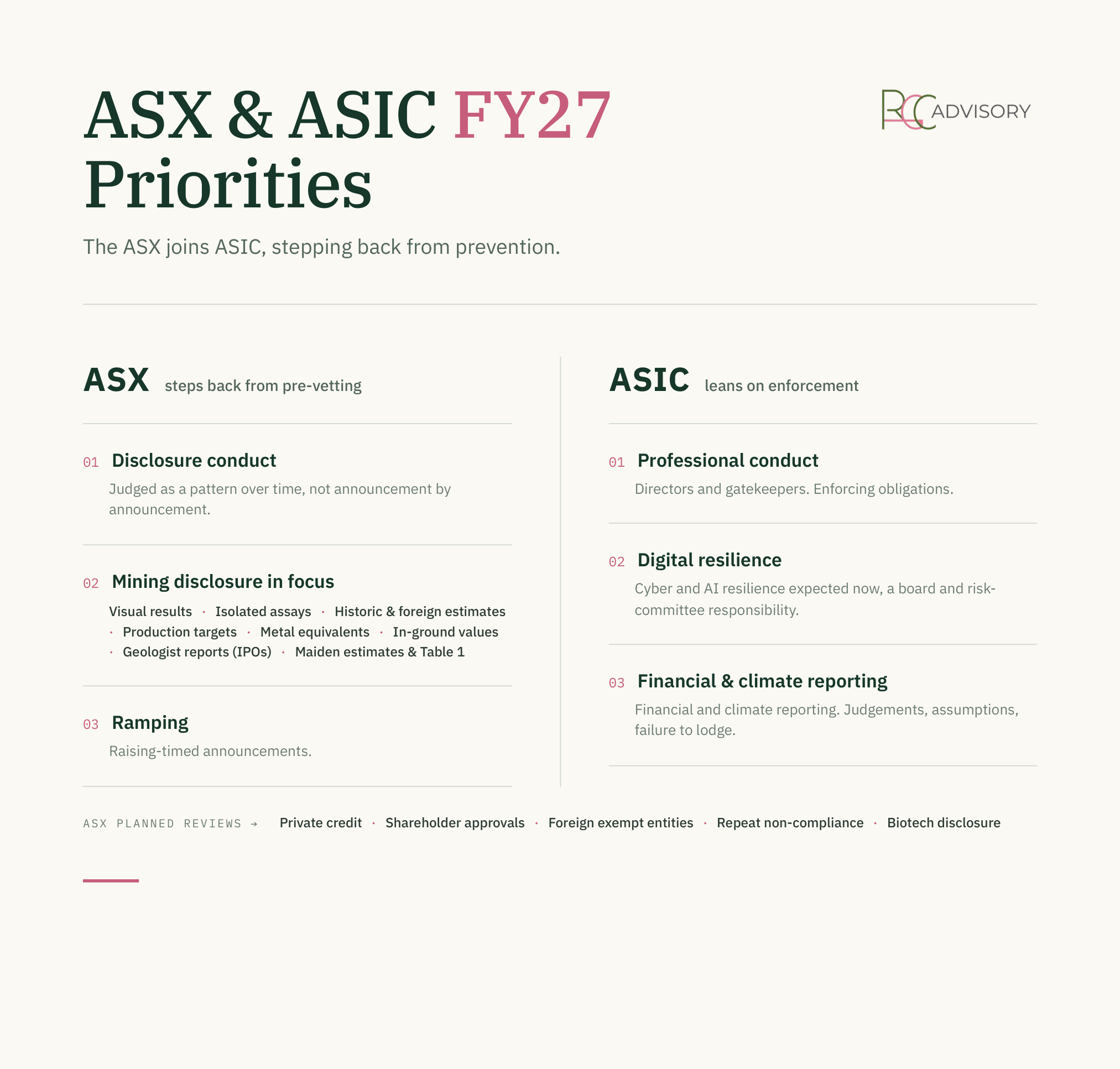
In its inaugural Listed Entity Supervision Report, the ASX is shaping up to this familiar posture. It is winding back the pre-release review that used to catch problems before they reached the market, and moving to conduct monitoring and post-release compliance action. Directors keep their place at the top of the cliff. The ASX is joining ASIC at the bottom, ready to act once the fall has happened.
When regulators change their playbook, directors and their advisers have to change theirs. The old calculus assumed barriers and backstops. Listed entities could adopt strategies with considered risk on borderline announcements, trusting that someone would intervene if they crossed any regulatory lines, before they did any harm or became an enforcement risk. That assumption no longer holds.
The watchers now track conduct over time rather than announcement by announcement, so a run of borderline calls builds a record that a single release never would. And when ASIC or ASX choose to intervene, there are more tools at their disposal, with a crystallised contravention activating a broader range of powers.
Regulators are leaning more on their powers to enforce compliance, instead of their power of persuasion.
What the priorities mean for mining disclosure
For the mining sector there is a reprieve, and a warning. The reprieve is that the ASX has not left the clifftop entirely. It still invites pre-release review of sensitive disclosures such as scoping studies, where the requirements are most complex and the risk of non-compliance runs highest.
The warning is in how much of the report points at miners. The ASX has flagged a dedicated review of annual mineral resources and ore reserves statements, and set out a long list of mining disclosures it will watch closely. Visual results. Isolated assays. Historic and foreign estimates. First-time metal equivalents. Production targets and in-ground values. Table 1. Read the list as more than a checklist. The ASX sits on the JORC committee and has said it will help shape the next edition of the Code, so its focus areas are an early signal of where the Code itself is heading.
The focus list is not a free pass on everything else, either. The ASX has said it will not go looking for non-compliance outside its stated areas, but it will still follow up other concerning conduct when it finds it, with a sharper eye on market impact. The safe reading is to get the named areas right without letting the rest slip.
How to get ahead of it
The message is clear. More is expected from directors, and the whole disclosure record is now in view, across disciplines and over time. Manual reviews, and compliance checked one announcement at a time, will not see the conduct story the regulators are watching. That piecemeal approach was built for a regime that checked your work before it mattered. It fits poorly with one that weighs the whole picture after the fact.
End-to-end reviews are what RGC Advisory does best. JORC, legal and financial in one place, from former senior regulators who know what to look for, armed with custom AI tools you won't find anywhere else.